
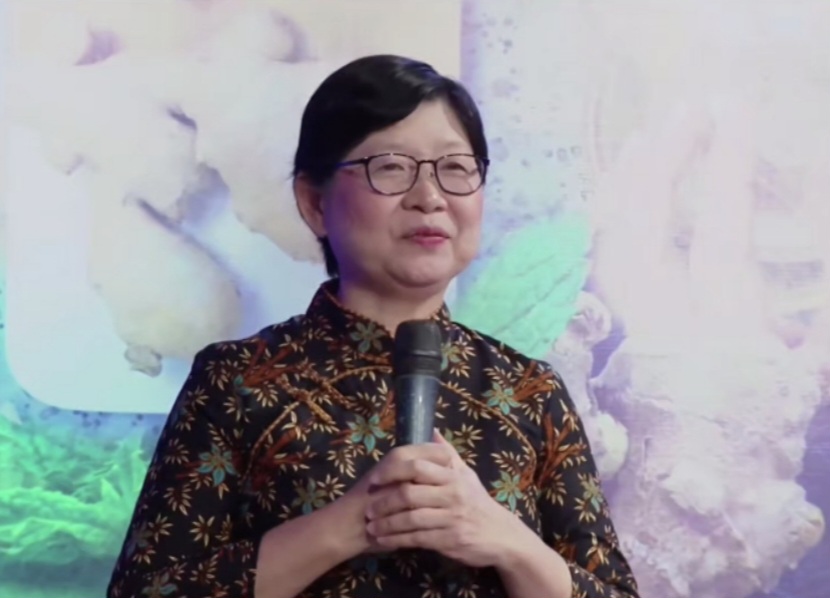
SURABAYA – Indonesia’s rich herbal heritage should be utilized wisely, safely, and based on scientific evidence. This message was conveyed by Dr. Maya Septriana, S.Si., Apt., M.Si., a lecturer in the Applied Bachelor’s Program in Traditional Medicine (Battra) at the Faculty of Vocational Studies, Universitas Airlangga (UNAIR). She delivered her insights at a Focus Group Discussion (FGD) entitled “From Tradition to Industry: Herbal Medicine for Health and Economic Value,” organized by JTV at Studio 3 JTV Surabaya on Friday (October 23, 2026).
The discussion also featured Dra. Minarni Purnomo, Apt., M.Si., Chairperson of the Indonesian Association of Herbal Medicine and Traditional Medicine Entrepreneurs (GP Jamu), and Dr. Enung Siti Nurhidayah, Head of the Center for Spice and Medicinal Plant Research and Innovation at Universitas Trunojoyo Madura. Several UNAIR Traditional Medicine students attended the event, gaining insights into herbal medicine from the perspectives of academics, researchers, and industry practitioners.
In her presentation, Dr. Maya highlighted Indonesia’s diverse herbal resources, including ginger, turmeric, Java turmeric, and aromatic ginger, which have long been used across generations to support public health. She emphasized that this traditional knowledge must be accompanied by a proper understanding of the benefits and limitations of herbal products. “Herbal medicine is most beneficial when used as a complement, not as a shortcut,” she stated.
Dr. Maya explained that herbal medicine plays three important roles: supporting physical well-being, preserving traditional knowledge, and ensuring safe use. These three aspects must work together so that people can benefit from herbal products responsibly. For example, drinking traditional herbal beverages to maintain daily stamina can be part of a healthy lifestyle, but they should never replace medication prescribed by a doctor.
She also stressed the importance of distinguishing between maintaining health and treating diseases, as these two purposes are often misunderstood by the public. Herbal products may support general well-being when combined with adequate sleep, regular physical activity, and a balanced diet. However, persistent or severe symptoms require proper medical attention, including examination, diagnosis, and treatment by a qualified physician. She urged the public to remain critical of exaggerated claims about herbal products, particularly those promising to cure diseases without sufficient scientific evidence.
To help people make informed decisions, Dr. Maya outlined five essential steps before using herbal products. First, users must ensure that the ingredients are correctly identified. Second, they should choose products registered with Indonesia’s National Agency of Drug and Food Control (BPOM). Third, herbal products must be used according to the recommended dosage and instructions. Fourth, proper hygiene must be maintained during preparation and storage. Finally, people who take medication, are pregnant, or have chronic illnesses should consult a healthcare professional before using herbal products.
Dr. Maya further reminded the public not to delay medical treatment when experiencing warning signs. Symptoms such as shortness of breath, chest pain, or loss of consciousness require immediate medical attention. Other concerning symptoms include high fever, persistent pain, bleeding, severe vomiting or diarrhea, and any condition that worsens after consuming herbal preparations. She particularly cautioned against abandoning medical treatment entirely in favor of herbal remedies. “Do not stop taking medication prescribed by a doctor without guidance from a healthcare professional,” she emphasized.
Beyond individual responsibility, Dr. Maya noted that ensuring the safety and effectiveness of herbal products requires collaboration among multiple stakeholders. The government is responsible for regulation, supervision, and the preservation of traditional resources. Academic institutions contribute scientific research, while the herbal industry must ensure that production and commercialization comply with Good Traditional Medicine Manufacturing Practices (CPOTB). Healthcare professionals play a role in assessing appropriate use and potential interactions, while the media and the public contribute to improving health literacy. “Better health is a shared responsibility,” she explained.
This collaborative approach highlights the strategic role of higher education institutions in developing Indonesia’s traditional medicine sector. As a study program that prepares future traditional medicine practitioners, UNAIR’s Battra program bridges local knowledge and the need for scientific validation. The students’ participation in the discussion provided an opportunity to explore how herbal medicine is viewed from different perspectives, ranging from patient safety and scientific research to industrial development. Such experiences are valuable in preparing future practitioners to serve communities responsibly.
Dr. Maya’s message reflects the broader objective of the FGD: ensuring that Indonesia’s herbal resources are preserved not only as part of the nation’s cultural heritage but also developed into safe, high-quality products with economic potential. With stronger public awareness, scientific research, and collaboration among stakeholders, herbal medicine can contribute to public health while complementing modern healthcare services. Ultimately, its development must be accompanied by responsible practices, evidence-based claims, and a clear understanding of its role and limitations.


Leave a Reply