
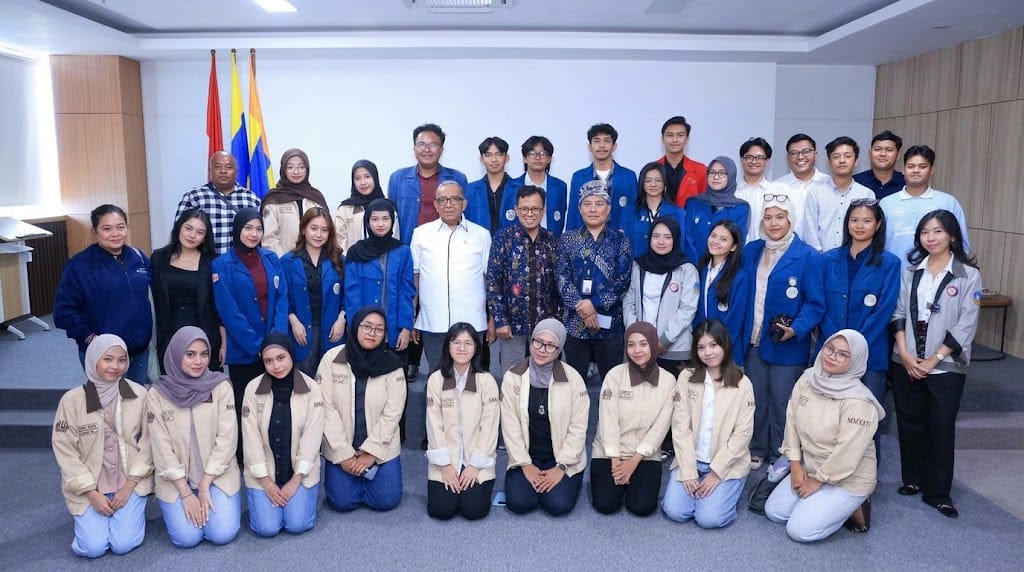
SURABAYA – Deputy Minister of Manpower Afriansyah Noor has emphasized the importance of providing industry-oriented vocational training and expanding access to decent employment for young people. These efforts are part of the government’s strategy to prepare the younger generation for the workforce, strengthen their competencies, and promote economic independence.
Afriansyah delivered these remarks during a public lecture organized by the Student Executive Board (BEM) of Universitas Airlangga (UNAIR) in Surabaya, East Java, on Wednesday, October 28, 2026. The event carried the theme “Reflecting on the 98th Youth Pledge: Free Education and Employment Access as Pathways to Breaking the Cycle of Poverty.”
During the lecture, Afriansyah explained that expanding employment opportunities requires several strategic initiatives, including national internship programs, improved labor market information services, worker protection, and broader access to inclusive and decent employment.
One of the key strategies to improve young people’s readiness for the workforce is vocational training through government-run Vocational Training Centers (Balai Latihan Kerja/BLK). These programs provide skills development, reskilling opportunities, and competency certification to ensure that participants acquire qualifications relevant to current industry demands.
“We hope that accessible training programs will improve skills and competencies that are aligned with industry needs,” Afriansyah stated.
Aligning Vocational Training with Industry Needs
To ensure that workforce competencies meet industry requirements, the Ministry of Manpower is strengthening collaboration with local governments, universities, and business sectors.
This collaboration aims to ensure that training materials are designed according to labor market demands. As a result, participants are expected to develop practical skills that match available employment opportunities.
In addition to vocational training, access to labor market information and employment placement services plays an important role in expanding job opportunities. These services help job seekers identify employment opportunities that match their qualifications and competencies.
The Ministry of Manpower also encourages stronger professional standardization, increased productivity, and partnerships with businesses. These initiatives are intended to bridge the gap between job seekers’ capabilities and the skills required by employers.
Training Success Goes Beyond Certification
Afriansyah emphasized that the success of vocational training programs should be evaluated based on the outcomes achieved by participants after completing their training. Evaluation should not be limited to the number of participants or competency certificates issued.
Instead, the assessment should also consider graduates’ progress, including their ability to secure employment or establish independent businesses.
Graduate tracking and feedback from industry partners are essential to determine whether training programs remain relevant to labor market demands. Through these evaluations, the actual benefits of training and its contribution to workforce readiness can be measured more effectively.
This approach places employment outcomes and practical competencies at the center of vocational training evaluation, ensuring that the skills acquired provide meaningful benefits for participants’ future careers.
Equal Access to Decent Employment Without Discrimination
Beyond aligning workforce competencies with industry requirements, Afriansyah highlighted that opportunities to participate in training programs and obtain decent employment must be accessible to all members of society without discrimination.
Groups requiring particular attention include first-time job seekers, active workers, vulnerable communities, and people with disabilities.
Equal access to training and employment opportunities is essential to creating a more inclusive workforce, allowing individuals from different backgrounds to improve their skills and pursue sustainable livelihoods.
Afriansyah further stressed that future employment policies must focus on expanding access, maintaining inclusivity, ensuring industry relevance, improving training quality, strengthening collaboration, and measuring tangible impacts on public welfare.
“The broader agenda ahead rests on expanding access, maintaining inclusivity, ensuring relevance, improving quality, strengthening collaboration, and measuring tangible impacts on people’s welfare,” Afriansyah stated.
Through this initiative, the Ministry of Manpower hopes to strengthen the connection between vocational education and employment opportunities while preparing Indonesia’s younger generation to compete in an increasingly dynamic labor market.
The public lecture at Universitas Airlangga also provided an opportunity for students to gain broader insights into employment challenges and the importance of developing relevant skills as part of their preparation for entering the professional world.





Leave a Reply