
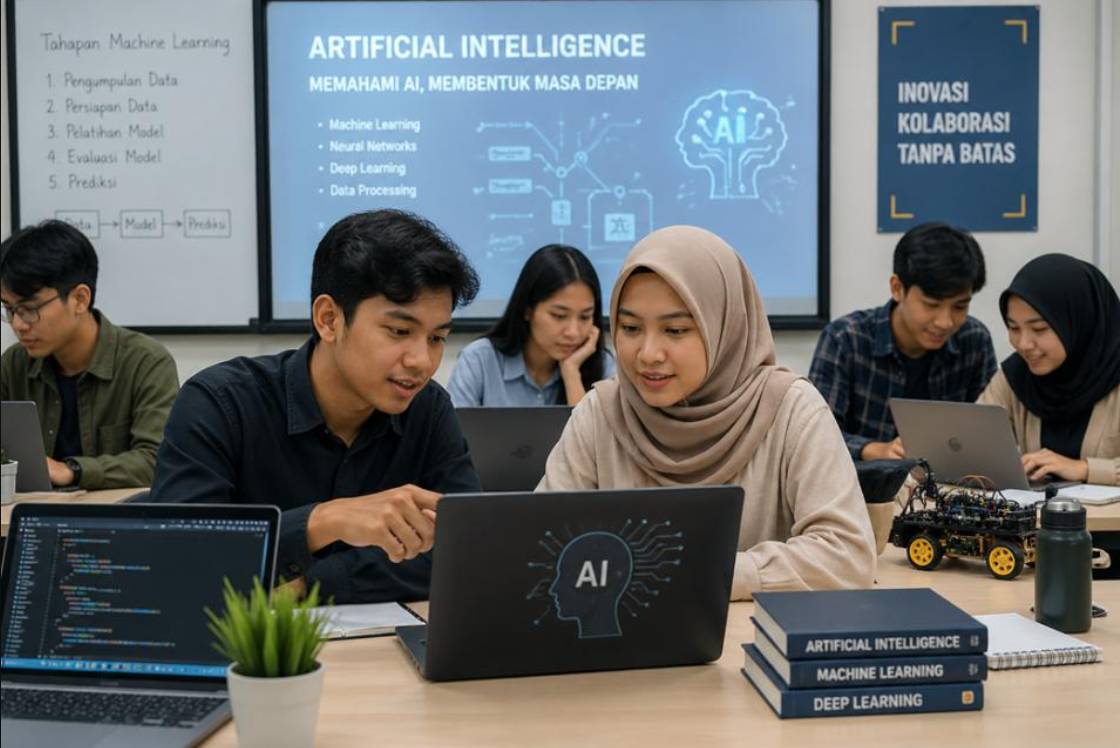
SURABAYA – The rapid development of artificial intelligence (AI) is changing the way people learn, work, and solve problems. In higher education, AI tools can support research, help organise information, and introduce new approaches to learning. For vocational students, understanding how to use these tools responsibly may become an important part of preparing for an increasingly digital workplace.
AI can assist with tasks such as generating initial ideas, summarising reference materials, organising data, and exploring possible solutions to technical problems. These uses can help students work more efficiently, but the results still need to be checked. AI-generated information may be incomplete, inaccurate, or unsuitable for a particular context, making verification an essential part of the process.
Vocational education places strong emphasis on applying knowledge to practical situations. Students are expected to understand the principles behind a task and demonstrate that they can carry it out. AI may support this process, but it cannot replace hands-on practice, professional judgement, or direct experience with real equipment, clients, and workplace situations.
Responsible use also involves academic integrity and data protection. Students need to follow institutional guidance, acknowledge sources where required, and avoid entering confidential or personal information into tools that are not approved for such use. Understanding these boundaries is as important as learning the technical features of AI applications.
Lecturers can help students build these skills by designing assignments that require analysis, reflection, and evidence of the learning process. Rather than focusing only on the final answer, assessment can consider how students evaluate information, explain their decisions, and apply their knowledge to a practical problem.
As industries continue to adopt digital tools, graduates may benefit from combining digital literacy with communication, creativity, teamwork, and ethical awareness. The goal is not simply to use the newest technology, but to understand when it is useful and how to apply it responsibly.




Leave a Reply