
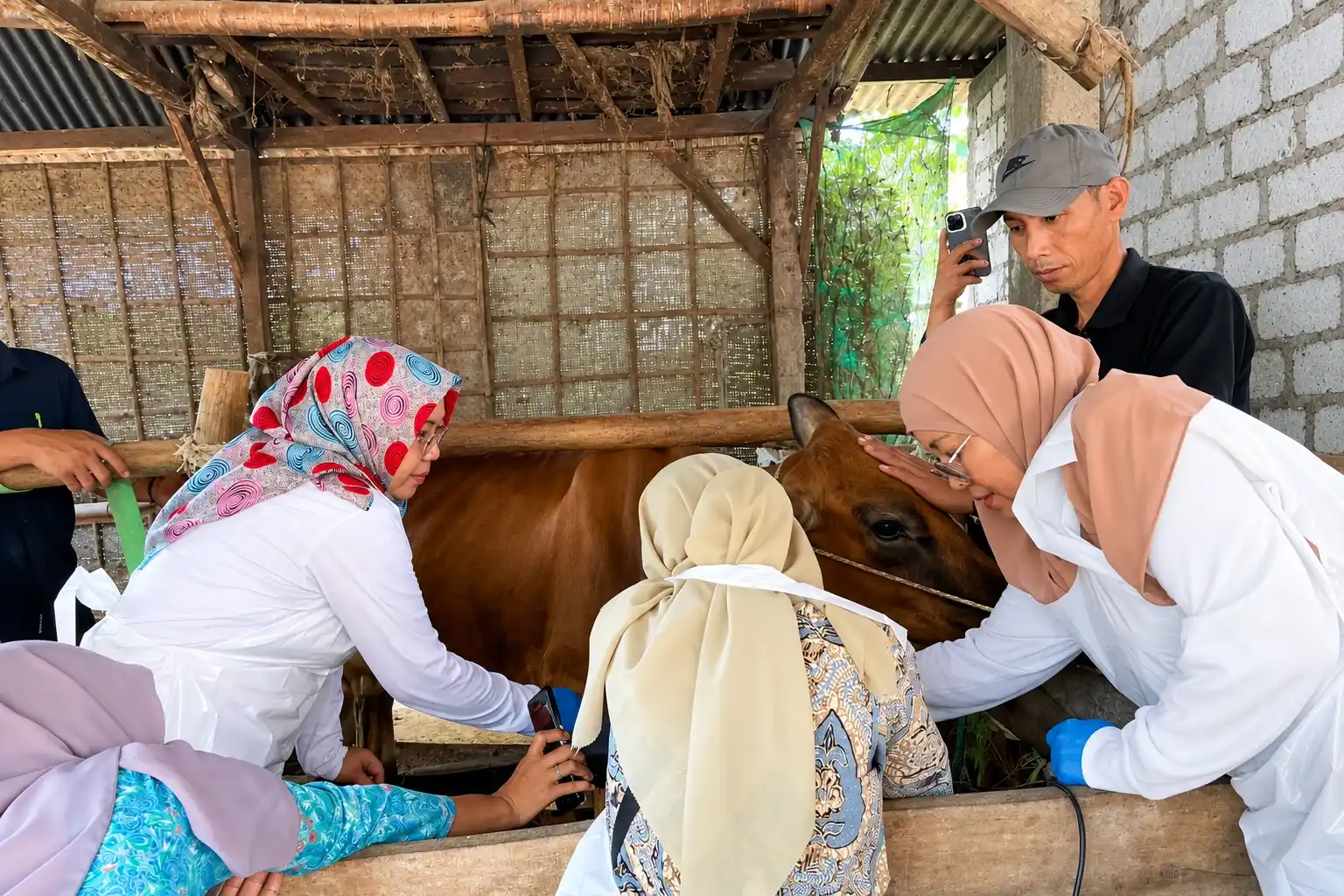
SURABAYA – The D4 Veterinary Technology Study Program at the Faculty of Vocational Studies, Universitas Airlangga (UNAIR), is supporting efforts to improve the productivity and independence of beef cattle farmers through the application of reproductive technology. The initiative was carried out through a community service program in Sidowayah Hamlet, Lawanganagung Village, Sugio District, Lamongan Regency.
The program introduced laser acupuncture (laserpunktur) technology, fermented feed made from locally available agricultural waste, and improved business record-keeping practices for beef cattle farmers. The activity was held on August 16, 2026, and involved 20 farmers from the Sidomakmur Livestock Group.
The livestock group is currently working to restore the number of productive breeding cows after its cattle population was affected by a foot-and-mouth disease outbreak. Throughout the program, participants took part in activities ranging from educational sessions to hands-on practice at the cattle sheds.
Laser Acupuncture to Address Silent Heat
One of the main technologies introduced was laser acupuncture, which was presented as an approach to address silent heat, a condition in which signs of estrus are difficult to observe, making it challenging to determine the appropriate time for mating or artificial insemination.
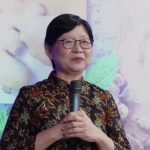
Dr. Miyayu Soneta Sofyan, DVM, M.Vet., head of the community service team from UNAIR’s Veterinary Technology Study Program, explained that laser acupuncture uses low-power laser light directed at reproductive acupuncture points to stimulate the occurrence of estrus more synchronously. The compact device operates using an electrical power source, does not require hormonal preparations, and does not injure the animals, allowing it to be used repeatedly on multiple cattle.
More easily observed signs of estrus can help farmers and veterinary personnel determine a more appropriate time for artificial insemination. The application of laser acupuncture is classified as a veterinary medical procedure. Therefore, its implementation is carried out by veterinarians and veterinary medical personnel. In this program, the procedure was conducted together with officers from the Lamongan Regency Livestock and Animal Health Service.
Farmers were involved in observing their cattle, preparing breeding cows, recording reproductive events, and reporting observations to veterinary personnel. The team also established a communication group with farmers to provide assistance when problems arise in the field. Standard operating procedures will also be placed at the livestock facility as a practical guide.
Developing Fermented Feed and Business Records
In addition to reproductive technology, the program introduced farmers to fermented feed production. Dr. Siti Eliana Rochmi, DVM, M.Si., explained how corn stalks can be processed into fermented feed using a chopper machine.
The materials are mixed with concentrate, EM4 solution, and molasses before being stored in an airtight environment for approximately three weeks. The program also discussed the nutritional requirements of pregnant cows, including concentrate portions, forage availability, and mineral supplementation approaching the seventh month of pregnancy.
Meanwhile, Dr. Emy Koestanti Sabdoningrum, DVM, M.Kes., a lecturer from the Veterinary Technology Study Program, provided training on livestock business management. Farmers were introduced to reproductive record cards containing information such as estrus dates, artificial insemination, and pregnancy examinations, along with simple business bookkeeping.
These records are expected to help the livestock group independently monitor reproductive performance and evaluate the economic development of its farming activities.
Towards a More Independent Livestock Group
The program adopted a pentahelix approach, bringing together the roles of government, academia, village-owned enterprises, livestock groups, and the media. The Lamongan Regency Livestock and Animal Health Service also supported the field activities and expressed its readiness to continue assisting farmers through artificial insemination services, vaccination, and veterinary treatment.
Two students from the D4 Veterinary Technology Study Program, Pandu Dwi Prasetyo and Nur Alifia Saifatul Firda, also participated through the Merdeka Belajar Kampus Merdeka program. They assisted the speakers, helped farmers identify signs of estrus, and supported the program’s administrative activities from preparation to reporting.
The team hopes that the technology introduced through the program will not stop at training activities but will continue to be applied and developed by the livestock group. Through collaboration between UNAIR, the local government, and farmers, the program seeks to provide practical technologies that respond to real needs in the field and support greater independence among beef cattle farmers in Lamongan.
Leave a Reply