
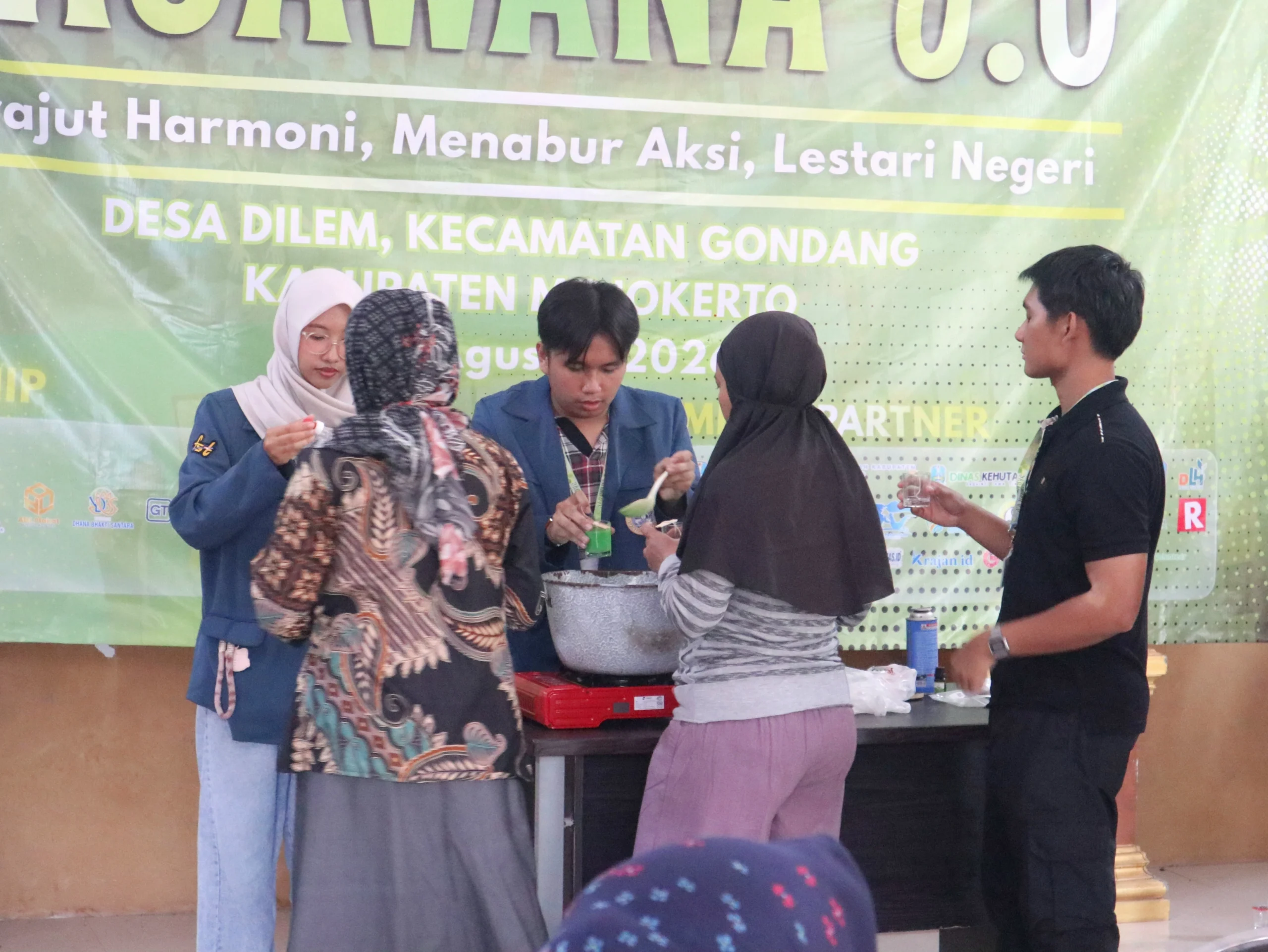
SURABAYA – The Student Executive Board (BEM) of Universitas Airlangga (UNAIR) promoted the concept of a circular economy through the Jagawana Volume 5 program in Dilem Village, Mojokerto Regency. The program was held from August 18 to 26, 2026, and focused on introducing renewable energy technology and circular economy practices to the local community.
Titled “Implementation of Renewable Energy Technology and Circular Economy in Dilem Village,” the program received funding through UNAIR Sustain Action from UNAIR’s Institute for Sustainable Community Service (LPMB). The initiative aimed to address household waste management while also exploring the economic potential of local commodities, particularly coffee.
Turning Waste into Valuable Products
One of the main activities was Lentera Asa, which introduced residents to the process of turning used cooking oil into candles. Participants first filtered the used oil before mixing it with solidifying materials and aromatherapy ingredients. The mixture was then molded into candles that could be used personally or sold as products.
Meanwhile, Eco-Craft Studio introduced the concept of circular economy to students at SDN Dilem through a hands-on activity. The students learned how to transform used plastic bottle caps into keychains, encouraging them to recognize the potential value of discarded materials through creative activities.
BEM UNAIR’s activities also extended beyond waste management. Through Ruang Seduh, the team introduced residents to coffee brewing techniques, coffee bean processing, marketing strategies, and ways to utilize coffee-processing by-products to increase added value for local micro, small, and medium enterprises (MSMEs).
Building Sustainable Habits
The various activities encouraged residents to view waste differently. Through hands-on experiences, they learned that discarded materials do not necessarily have to end up as waste. Instead, used materials can be transformed into new resources with practical and economic value.
The organizers hope that the skills introduced through Jagawana Volume 5 will continue to be practiced after the program ends. Residents, youth organizations, and local MSME actors are expected to continue sorting and reusing waste independently, contributing to a cleaner environment and a more sustainable village economy.
The program also contributed to several Sustainable Development Goals (SDGs), including SDG 4: Quality Education through circular economy education, SDG 8: Decent Work and Economic Growth through local economic development, and SDG 12: Responsible Consumption and Production through waste reuse.
Through Jagawana Volume 5, BEM UNAIR demonstrated how community-based education and practical activities can encourage sustainable waste management while creating opportunities for local economic development. The initiative highlights the potential of circular economy practices to turn everyday waste into resources with greater value for communities.
Make the English more naturally journalisticReduce repetition about circular economy
Leave a Reply