
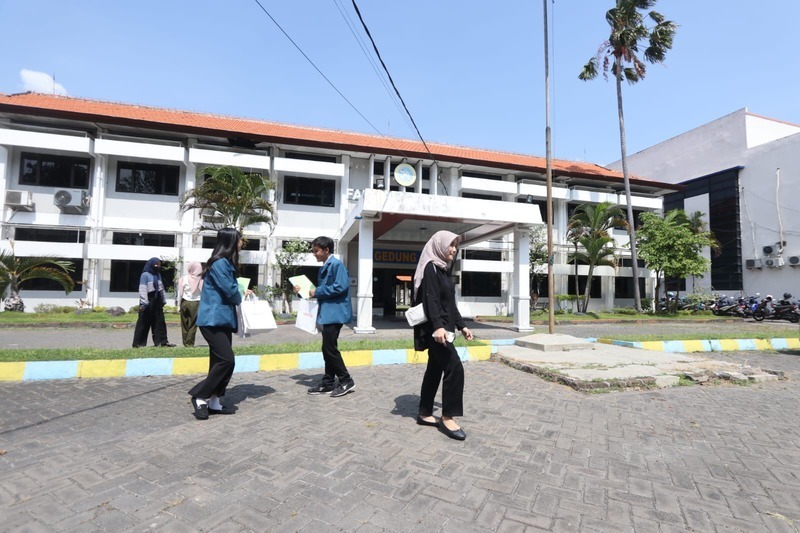
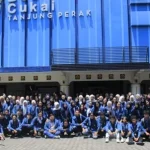
GRESIK – Efforts to raise health awareness in Islamic boarding schools continue through various educational initiatives. This time, students from the Diploma III Nursing Program, Faculty of Vocational Studies, Universitas Airlangga (UNAIR), conducted a health education program on scabies prevention for students at Darut Taqwa 3 Islamic Boarding School in Kebomas, Gresik, on October 2, 2026.
The activity was part of a Medical-Surgical Nursing course project focusing on the prevention of skin diseases, particularly scabies among adolescents living in Islamic boarding schools. A total of 25 students participated in the program, which was organized by Group 4 of class GR-3A under the supervision of Dr. Hafna Ilmy Muhalla, S.Kep., M.Kep., Sp.Kep.M.B.
Islamic boarding schools were selected as the target environment due to the importance of maintaining skin health in residential settings where students engage in frequent daily interactions. Crowded living conditions and the habit of sharing personal belongings can increase the risk of skin disease transmission if personal and environmental hygiene are not properly maintained.
Introducing the Symptoms and Transmission of Scabies
During the activity, the nursing students provided information about scabies, covering its definition, causes, symptoms, risk factors, and transmission methods. Scabies is a contagious skin disease caused by an infestation of the mite Sarcoptes scabiei var. hominis, commonly characterized by intense itching, particularly at night.
The students also explained how scabies can spread through direct skin-to-skin contact and the shared use of personal belongings, such as clothing, towels, blankets, and bedding.
Through this educational session, the nursing students encouraged participants to pay closer attention to daily habits that may increase the risk of transmission. These included avoiding the sharing of personal belongings and adopting clean and healthy living practices.
Interactive Education to Improve Students’ Understanding
The educational materials were delivered interactively using supporting media, including leaflets and banners. These materials were designed to help participants understand the information more easily and remember practical steps for preventing scabies.
Before the presentation, participants completed a pre-test to assess their initial understanding of scabies. The activity continued with a presentation and discussion session, providing students with opportunities to ask questions about skin health and related concerns.
Following the educational session, the nursing students conducted a post-test to evaluate participants’ understanding after receiving the materials.
Through this approach, the program went beyond simply delivering information. It also encouraged active participation among students in recognizing and preventing skin diseases within their residential environment.
Student Collaboration in Community Health Education
The successful implementation of the program was supported by the collaboration of all members of Group 4, class GR-3A. Rahma Fitria Anifa Muazaroh served as the team leader, coordinating the preparation and implementation of the activity.
Meanwhile, Siti Haliza Putri and Salwa Putri Rahmadani were responsible for event coordination, Aidah Suroyya handled publication and documentation, Rizky Kusuma managed equipment, Siti Muberokah handled consumption, Silfia Nur Azizah was responsible for public relations and permits, while Nabilla Ary Surya Wijaya managed secretarial and financial affairs.
The division of responsibilities played an important role in ensuring that each stage of the activity proceeded according to plan. Coordination among team members also demonstrated the importance of teamwork and responsibility in carrying out community health education initiatives.
Promoting a Healthier Boarding School Environment
Through this educational initiative, UNAIR Nursing students hope to encourage greater awareness of skin health among boarding school students and promote the adoption of clean and healthy habits in their daily lives.
Scabies prevention does not depend solely on individual knowledge. It also requires collective awareness of environmental hygiene and the avoidance of habits that may contribute to disease transmission.
This activity also represents the application of nursing knowledge through health promotion and disease prevention. In addition to gaining practical experience in delivering health education, the students had the opportunity to contribute directly to raising public awareness of the importance of disease prevention.
This simple educational initiative is expected to serve as a starting point for establishing healthier habits within the boarding school community, ultimately creating a cleaner, healthier, and more comfortable learning and living environment while reducing the risk of scabies transmission.

Leave a Reply