
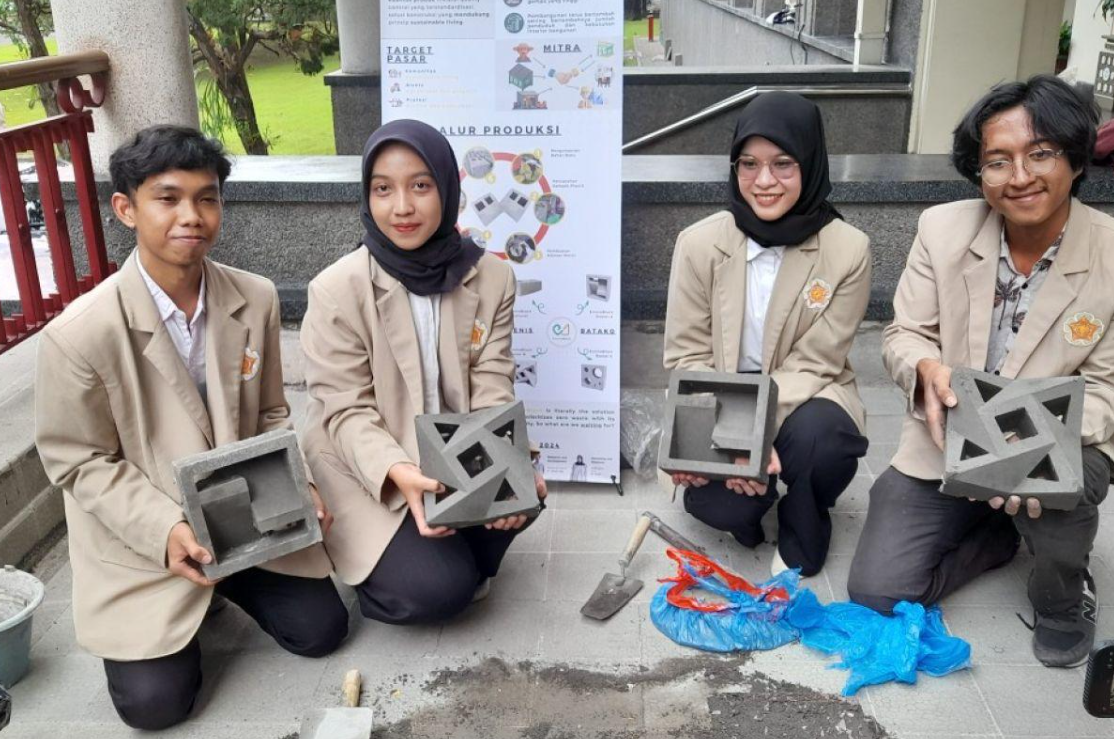
SURABAYA – Finding productive uses for waste is one way to address environmental challenges while exploring opportunities for innovation. Through research and product development, certain discarded materials may be processed into new products, provided their suitability, safety, and environmental implications are carefully assessed.
The development process begins with understanding the material. Researchers need to consider its composition, availability, consistency, and potential contaminants. A promising concept must then be tested to determine whether the resulting product meets the requirements for its intended use.
For products intended for construction or other demanding applications, performance testing is particularly important. Properties such as strength, durability, resistance to environmental conditions, and safety may need to be assessed using relevant standards. Claims about a product’s suitability should be based on results rather than assumptions about the benefits of recycling alone.
Vocational education can contribute by connecting applied research with practical experimentation. Students may participate in preparing materials, producing prototypes, recording results, and comparing different methods. These activities can help develop technical skills while encouraging careful documentation and evidence-based decision-making.
A product that performs well in a laboratory still faces challenges before wider adoption. Production costs, access to raw materials, manufacturing consistency, regulations, and market acceptance can all influence whether an innovation is viable. Environmental benefits should also be evaluated across the product’s life cycle where appropriate.
Collaboration between researchers, industry, local communities, and potential users can help identify practical requirements early. Such partnerships may support further testing, improve production methods, and clarify where a product could realistically be used.
Waste-based innovation offers opportunities, but its value depends on credible evidence and responsible implementation. Transparent reporting of both achievements and limitations can help the public understand what has been demonstrated and what remains to be developed.





Leave a Reply